
Rebel Audio vs Riverside vs Descript: Which AI Podcast Studio Should You Pick in 2026?
Veröffentlicht am 19. März 2026Aktualisiert am 9. Apr. 2026
Podcasting keeps growing. The AI podcasting market is projected to reach $5.36 billion in 2026, up from $4.06 billion the year before, growing at roughly 32% annually. More than 619 million people are expected to listen to podcasts this year, and the broader industry is on track to hit $114.5 billion by 2030. Yet launching a podcast still means stitching together a patchwork of tools: one for recording, another for editing, a third for hosting, a fourth for distribution, separate services for transcription, clip creation, cover art, and analytics. Six to eight subscriptions, dozens of hours learning different interfaces, and a budget that adds up fast.
That is the exact problem Rebel Audio is trying to solve. Unveiled at SXSW 2026 in Austin, this new platform bills itself as the "Canva of podcasting": an all-in-one, AI-native studio where you go from concept to published episode without ever leaving the app. Behind the project stands Jared Gutstadt, a veteran audio entrepreneur, and an advisory board that includes Mark Burnett, the legendary producer behind Survivor and Shark Tank. The startup just closed a $3.8 million oversubscribed seed round in under 30 days.
At Bridgers, we don't produce podcasts yet. But we have been watching the space closely, and Rebel Audio's promise of collapsing the entire podcast workflow into a single AI-powered tool is exactly the kind of proposition that could change our mind. We are planning to test it when the public launch rolls out on May 30, and we might just start a show. So consider this review both an analysis and a scouting report.
The question is whether Rebel Audio can actually deliver against established players like Descript, Riverside, and Spotify for Creators. Here is the full breakdown.
What Is Rebel Audio and Who Is It For?
Rebel Audio is a podcasting platform built for first-time and early-stage creators. Its ambition is to consolidate the entire production workflow into a single interface: audio and video recording, AI-assisted editing, cover art generation, automatic transcription, social media clip creation, hosting, distribution to more than ten platforms (Spotify, Apple Podcasts, YouTube, and others), and monetization.
The platform is currently in private beta, available by invitation only. The public launch is scheduled for May 30, 2026. Interested creators can join the waitlist at rebelaudio.ai.
The Team Behind the Platform
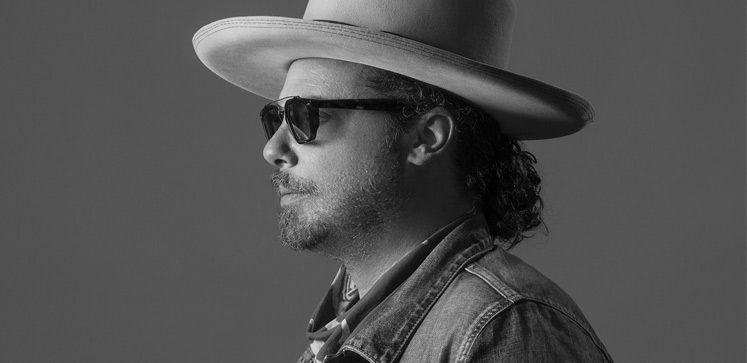
To evaluate Rebel Audio, you need to understand who built it. Jared Gutstadt, known as "Jingle Jared," is a serial audio entrepreneur. After earning his MA from NYU's Tisch School of the Arts, he started as a video editor at Viacom, working on MTV Cribs and Chappelle's Show. In 2008, he co-founded Jingle Punks, a music licensing company that grew to a catalog of 500,000 songs and supplied music to over 1,000 television shows including The Voice (five consecutive ASCAP Awards from 2010 to 2014) and Pawn Stars. William Morris Endeavor acquired a majority stake in 2012, and the company was later sold to ole Music Publishing in 2015.
In 2020, Gutstadt founded Audio Up Media, a narrative podcast studio with collaborations spanning Bob Dylan, Lil Wayne, Machine Gun Kelly, Miranda Lambert, DJ Khaled, and Stephen King. Audio Up received a $4.5 million investment from MGM Studios and won two Adweek awards in 2020: Podcast Innovator and Producer of the Year.
The leadership team includes Brian Edwards (co-founder and executive advisor, formerly at MGM and DreamWorks), Patrice Choghi (COO, with experience at MGM Studios, Televisa North America, and Mark Burnett Productions), and Bill Hobbs (board advisor, Vector Holdings). The company is based in Nashville, with offices in Los Angeles and Miami.
Mark Burnett as Inaugural Advisor
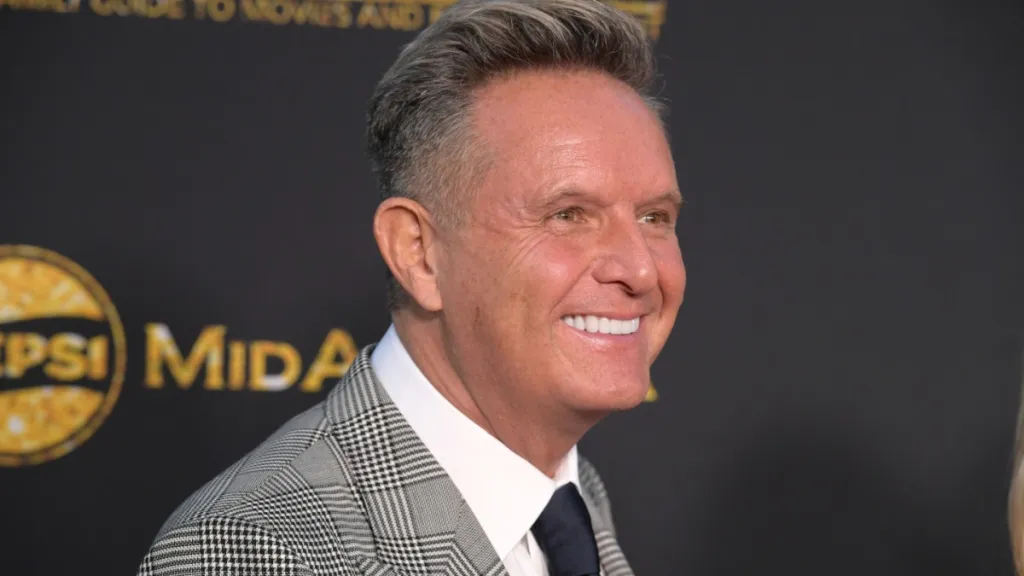
Recruiting Mark Burnett as the first official advisor is a strategic move. The producer behind Survivor, The Apprentice, The Voice, and Shark Tank brings credibility, entertainment industry connections, and deep expertise in format design and mass-audience storytelling. For a startup trying to attract both creators and investors, Burnett's endorsement is a significant signal.
$3.8 Million Seed Round
The seed round was oversubscribed within 30 days, with investors including Julie Gauthier, Benjamin Lurie, Jonathan Schulman, and Launch Tennessee, a nonprofit public-private partnership with a $70 million equity fund focused on high-growth startups. The speed of the fundraise suggests strong investor confidence in the AI-native podcasting thesis.
It is worth noting that $3.8 million is a modest sum for building a full-stack AI platform. For context, Descript has raised over $100 million to date, and Riverside has attracted tens of millions in venture capital. Rebel Audio will need to be capital-efficient, and the Lattice Partners development model (outsourcing AI engineering to a specialized studio rather than building a massive in-house team from day one) may be part of that strategy.
Rebel Audio's AI Features: A Deep Dive
What sets Rebel Audio apart from its competitors is its AI-first architecture. The platform was developed in partnership with Lattice Partners, an AI consulting firm and product studio. Here is what it offers.
Conversational AI Agent
Rebel Audio includes an AI voice agent that guides creators through pre-production. Describe your concept, and the assistant generates show name suggestions, episode descriptions, tags, and titles. The goal is to eliminate blank-page syndrome and compress the time between idea and first published episode.
AI-Generated Cover Art
Instead of hiring a designer or wrestling with graphic design tools, creators describe their visual concept and let the AI generate podcast artwork. The platform includes moderation systems designed to block inappropriate or non-compliant imagery, particularly content that could violate distribution platform guidelines.
Smart Clips: Viral Moment Detection
This is arguably the most strategically valuable feature. Rebel Audio automatically analyzes episodes to detect high-engagement moments, then generates formatted clips for TikTok, Instagram Reels, and YouTube Shorts. Short-form clips have become the primary discovery mechanism for podcasts, and automating their creation saves hours of manual work per episode.
Automatic Transcription with Speaker Detection
Transcriptions are generated automatically with speaker identification, serving accessibility, SEO, and text-based editing simultaneously.
AI Translation and Dubbing
The Pro plan includes episode translation into multiple languages, using a cloned version of the host's voice for dubbing. An English-language podcast can be automatically translated and distributed in Spanish, French, or other languages with a voice that sounds like the original host. This feature potentially opens international audiences without additional production effort.
Voice Cloning for Ad Reads
The Plus plan enables AI-cloned voice ad reads. Instead of manually recording each sponsorship spot, the AI generates them using your voice. Cloning is opt-in and requires rights verification.
Text-Based Editing and One-Click Publishing
Like Descript, Rebel Audio offers text-based editing: modify the transcript, and the audio follows. Publishing to Spotify, Apple Podcasts, YouTube, and other platforms happens in one click, with no manual RSS feeds or third-party tools required.
Rebel Audio Pricing: What Does It Actually Cost?
Rebel Audio's pricing is structured in three monthly tiers:
Feature | Basic ($15/mo) | Plus ($35/mo) | Pro ($70/mo) |
|---|---|---|---|
AI-assisted production | Yes | Yes | Yes |
Hosting and distribution | Yes | Yes | Yes |
AI cover art generation | Yes | Yes | Yes |
Automatic transcription | Yes | Yes | Yes |
Smart Clips | Yes | Yes | Yes |
Video hosting | No | Yes | Yes |
Voice cloning for ads | No | Yes | Yes |
Dynamic ad insertion | No | No | Yes |
Listener subscriptions | No | No | Yes |
AI translation and dubbing | No | No | Yes |
Audio Up network access | No | No | Yes |
At $15 per month, the Basic plan already covers recording, AI editing, hosting, and multi-platform distribution. That is aggressive pricing compared to the cost of assembling the same capabilities from separate tools. The Plus plan at $35 targets creators ready to monetize and produce video. The Pro plan at $70 is aimed at professional podcasters who need automated translation, dubbing, and advanced monetization.
A free seven-day trial is included at sign-up.
Rebel Audio vs Descript vs Riverside vs Spotify for Creators
Here is how Rebel Audio stacks up against the three main competitors in 2026.
Criteria | Rebel Audio | Descript | Riverside | Spotify for Creators |
|---|---|---|---|---|
Starting price | $15/mo | Free (limited), then $24/mo (Hobbyist, annual) | Free (limited), then $19/mo (Standard, annual) | Free |
Mid-tier plan | $35/mo (Plus) | $24/mo (Creator, annual) | $29/mo (Pro, annual) | N/A |
Professional plan | $70/mo (Pro) | $50/mo (Business, annual) | $35/user/mo (Teams, annual) | N/A |
Built-in recording | Yes | Yes | Yes | Yes (via Riverside, paid) |
Text-based editing | Yes | Yes (market leader) | Limited | No |
AI social media clips | Yes (Smart Clips) | Yes | Yes | No |
AI translation/dubbing | Yes (Pro) | Yes (30 languages) | No | No |
Voice cloning | Yes (Plus and Pro) | Yes (Overdub) | No | No |
AI cover art generation | Yes | No | No | No |
Podcast hosting | Yes (included) | No | No | Yes (free, unlimited) |
Multi-platform distribution | Yes (one-click) | No (manual export) | No (manual export) | Yes (via RSS) |
Built-in monetization | Yes (Pro) | No | No | Yes (Partner Program, 50/50 split) |
Max video quality | Not specified | 4K (Creator+) | 4K (Pro+) | Native video |
Conversational AI agent | Yes | No | No | No |
Where Rebel Audio Wins
The core advantage is vertical integration. It is the only platform that genuinely covers the entire chain from ideation to monetization without requiring external tools. The conversational AI agent, AI-generated cover art, and one-click distribution are unique. For a first-time podcaster who wants to launch a show without navigating a fragmented ecosystem, the value proposition is compelling.
Where Competitors Win
Descript remains the undisputed leader in text-based editing. Its editor is more mature, more precise, and has benefited from years of user feedback and iteration. Descript also offers AI video generation and a richer plugin ecosystem. For pure post-production, Descript has a significant head start.
Riverside excels at high-quality remote recording. The platform records tracks locally on each participant's device, ensuring superior audio and video quality even with unstable internet connections. If you regularly conduct remote interviews, Riverside remains the gold standard.
Spotify for Creators has the advantage of being completely free for hosting, with direct access to 713 million monthly active users. Its monetization program lowered eligibility thresholds by 80% in January 2026, now requiring just 1,000 engaged listeners, 2,000 consumed hours, and 3 published episodes. The tradeoff is a 50/50 advertising revenue split and the lack of advanced production tools.
Which Platform Should You Choose?
Rebel Audio is the best fit for creators who want everything in one place, without technical expertise, and are willing to pay $15 to $70 per month for that simplicity. Descript is for creators and teams that need advanced editing and deep post-production capabilities. Riverside is built for podcasters who prioritize studio-quality remote interviews. Spotify for Creators is the obvious choice for those starting with zero budget who want to monetize through the Spotify ecosystem.
One important nuance: Descript and Riverside offer annual billing discounts of up to 35%, which can significantly close the pricing gap. Descript's Creator plan drops to $24 per month on annual billing, compared to Rebel Audio's $35 Plus plan. However, neither Descript nor Riverside includes hosting or distribution, so you would still need a separate service for that, adding to the total cost. Rebel Audio's all-in-one approach means the sticker price includes everything, which can actually be cheaper than the sum of separate tools.
The Concerns: AI Slop, Voice Cloning Ethics, and Content Moderation
The excitement around Rebel Audio should not overshadow the legitimate questions raised by a platform so deeply dependent on AI.
The AI Slop Problem
"AI slop" refers to mass-produced, low-quality AI-generated content that floods platforms. Spotify and Deezer have already had to crack down on thousands of fake AI-generated podcasts designed to inflate listens and capture advertising revenue. By democratizing podcast production to the point where anyone can publish a show in minutes, Rebel Audio risks amplifying this phenomenon.
The startup says it integrates moderation systems, but technical details remain vague. How do you distinguish a legitimate podcast produced with AI assistance from content generated entirely for spam? No player in the industry has answered this question satisfactorily yet.
Voice Cloning Ethics
Voice cloning is a powerful feature, but also a sensitive one. Rebel Audio requires explicit consent and rights verification before cloning a voice, and says it includes deepfake safeguards. That is the minimum. But the industry still lacks clear standards. What happens if a cloned voice is used for misleading advertisements? Who is liable when things go wrong? These regulatory questions remain open, and Rebel Audio, like everyone in the space, will need to navigate a legal framework that is still being written.
The Creativity Homogenization Risk
Delegating title generation, descriptions, cover art, and clip selection to AI saves time, but it can also flatten the creative output. If every creator uses the same models to generate the same types of content, the result could be a homogenization of podcasting. The best shows stand out because of their distinctiveness, and that is not easily delegated to an algorithm.
Should You Test Rebel Audio in 2026?
With $3.8 million in funding, Mark Burnett's endorsement, and a founder who knows the audio industry inside out, Rebel Audio has the resources and the credibility to make a serious run. The value proposition is clear: make podcasting as easy as posting an Instagram story. If the platform delivers on its promises when the public launch arrives in May, it could genuinely become the "Canva of podcasting" it claims to be.
But the road ahead is long. Descript and Riverside have years of lead time in terms of stability, proven features, and user bases. Spotify for Creators has an unmatched distribution advantage. And the AI-related concerns around content quality, cloning ethics, and moderation are not going away.
For creators considering a podcast in 2026, Rebel Audio deserves a spot on your shortlist. The beta sign-up is free, and the seven-day trial costs nothing. It is the kind of tool that could finally democratize a format that remains too technically complex for most people, provided the technology matches the ambition.
At Bridgers, we plan to give it a proper test run when the doors open in May. If it lives up to even half of the promise, it might be the push we need to finally launch our own show. The all-in-one model is particularly appealing for an agency like ours: we do not have a dedicated audio engineer, and the idea of going from concept to published episode without hiring a specialist or learning five different tools is exactly the kind of efficiency gain we look for when evaluating new channels.
The podcasting market is entering a new phase where AI is not just a feature but the foundational architecture. Rebel Audio is betting that the next generation of podcasters will expect their tools to work the way ChatGPT works: describe what you want, and the system handles the rest. Whether that bet pays off will depend on execution. But if you are even slightly curious about podcasting, now is a good time to start paying attention.
Klare, transparente Preise ohne versteckte Kosten.
Keine Verpflichtung, Preise, die Ihnen helfen, Ihre Akquise zu steigern.

Credits(optional)
Sie benötigen keine Credits, wenn Sie nur E-Mails senden oder auf LinkedIn-Aktionen ausführen möchten
Können verwendet werden für:
E-Mails finden
KI-Aktion
Nummern finden
E-Mails verifizieren
€19pro Monat
1,000
5,000
10,000
50,000
100,000
1,000 Gefundene E-Mails
1,000 KI-Aktionen
20 Nummern
4,000 Verifizierungen
€19pro Monat
Entdecken Sie andere Artikel, die Sie interessieren könnten!
Alle Artikel ansehenSoftware
Veröffentlicht am 14. Mai 2024
7 Alternativen zu Folderly, um Ihre Zustellbarkeit im Jahr 2026 zu verbessern
 Marie Head Of Sales
Weiterlesen
Blog
Veröffentlicht am 5. Apr. 2025
FullEnrich: Bewertungen, Preise und Alternativen, um böse Überraschungen zu vermeiden
 Mathieu Co-founder
Weiterlesen
Software
Veröffentlicht am 11. Juli 2024
7 Alternativen zu Expandi, um Ihre Akquisitionskosten zu senken
Marie Head Of SalesWeiterlesen
Software
Veröffentlicht am 22. Apr. 2024
Die 5 besten Alternativen zu Dropcontact für eine bessere B2B-Kundenakquise
Marie Head Of SalesWeiterlesen
Software
Veröffentlicht am 14. Juli 2024
6 Alternativen zu Skylead, um Kosten zu sparen und Ihre Lead-Generierung zu verbessern
Marie Head Of SalesWeiterlesen
Software
Veröffentlicht am 31. März 2025
9 Alternativen zu UpLead, um Ihre Kundenakquise WIRKLICH anzukurbeln
 Niels Co-founder
Weiterlesen
 Maylee
Made with ❤ for Growth Marketers by Growth Marketers
Copyright © 2026 Emelia All Rights Reserved