
Cursor vs Lovable vs v0 vs Claude Code: The Ultimate Vibe Coding Tools Comparison Guide (2026)
Publicado em 23 de mar. de 2026Atualizado em 27 de mai. de 2026
Cursor vs Lovable vs v0 vs Claude Code: The Ultimate Vibe Coding Tools Comparison Guide (2026)
Vibe coding has moved beyond buzzword status to become a daily reality for tech teams worldwide. Since Andrej Karpathy, OpenAI co-founder and former head of AI at Tesla, coined the term in February 2025, the ecosystem of AI-assisted development tools has exploded. In 2026, four platforms dominate the landscape: Cursor, Lovable, v0 by Vercel, and Anthropic's Claude Code. Each takes a radically different approach to software development. At Bridgers, we use all four tools daily, and we decided to share our complete analysis to help you choose the right one for your needs.
What Is Vibe Coding and Why Is Everyone Talking About It in 2026?
Vibe coding is a development approach where the programmer no longer writes code line by line. Instead, they describe what they want in natural language, and an AI model generates the corresponding code. The developer becomes a supervisor who guides, tests, and refines the machine's output.
Karpathy described the concept as follows: "You fully give in to the vibes, embrace exponentials, and forget that the code even exists." While the statement was deliberately provocative, the reality of 2026 has partly proven him right. Today's tools allow an experienced developer to multiply their productivity by two or three, and enable non-technical users to build functional applications without writing a single line of code.
The term was named Collins English Dictionary's Word of the Year for 2025, and Merriam-Webster had already listed it as a "slang and trending" expression in March 2025. But behind this single label lie very different realities depending on the tool being used. That is precisely what we will examine in detail.
Cursor: The AI Code Editor Built for Professional Developers
An IDE Supercharged With Artificial Intelligence
Cursor is a code editor forked from Visual Studio Code, developed by Anysphere, a San Francisco startup founded in 2022 by four engineers under 30: Michael Truell, Aman Sanger, Sualeh Asif, and Arvid Lunnemark. In November 2025, Anysphere raised $2.3 billion, bringing its valuation to $29.3 billion, a figure that reflects the sheer scale of the market being addressed.
Cursor is designed primarily for professional developers. The tool retains the entire VS Code ecosystem (extensions, themes, keyboard shortcuts) while adding a deeply integrated AI layer. The goal is not to replace the developer but to make them considerably faster.
Cursor's Key Features in 2026
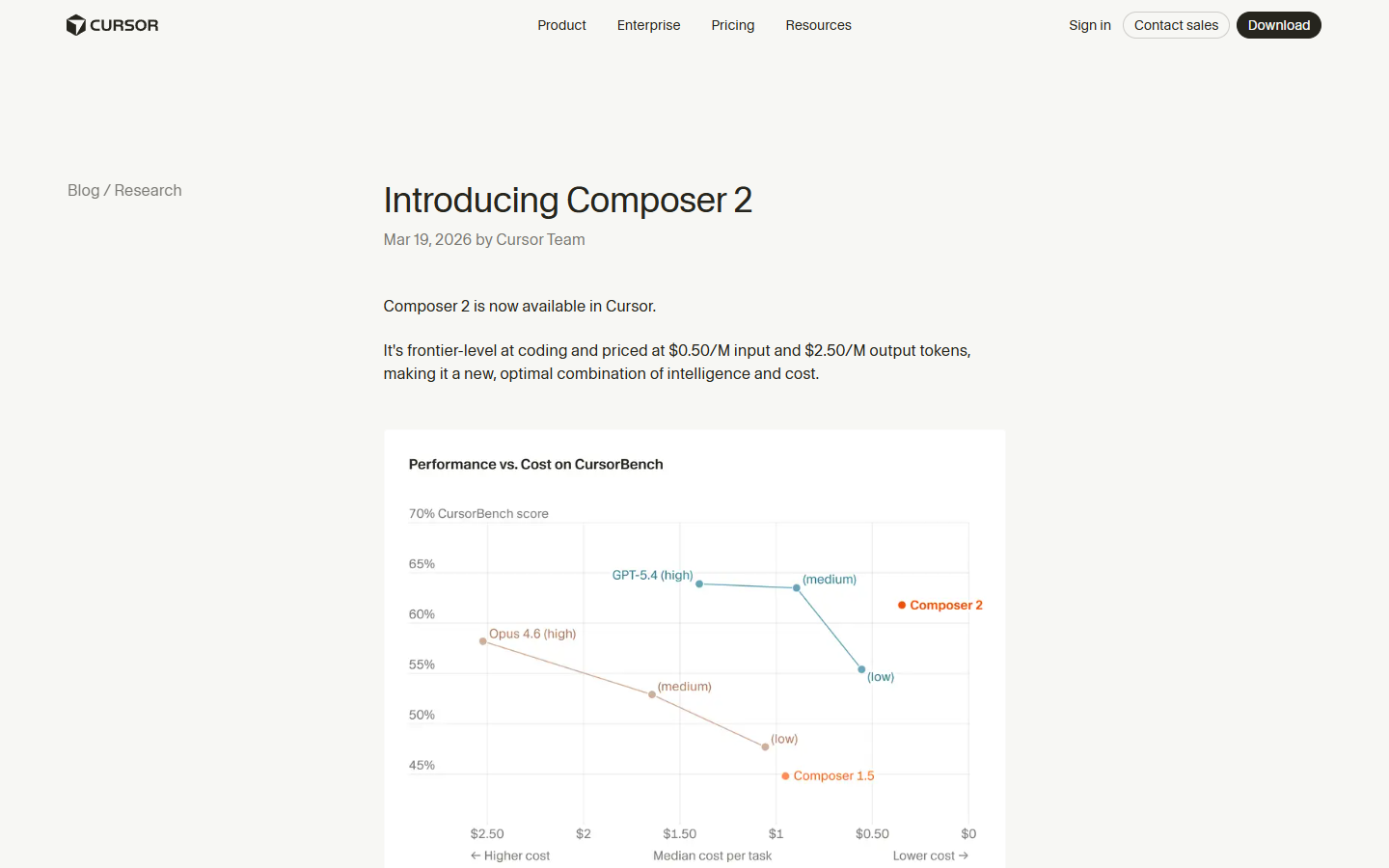
The latest major release is Composer 2, launched on March 18, 2026. This proprietary model, built on Moonshot AI's open-source Kimi K2.5 base and fine-tuned by Cursor's team, achieves frontier-level coding performance. Composer 2 scores 61.3% on CursorBench and 73.7% on SWE-Multilingual, directly rivaling Claude Opus.
Key features include:
Mission Control: a centralized dashboard for orchestrating multiple agents in parallel.
Autonomous Agents: agents capable of navigating an entire codebase, executing terminal commands, reading logs, and fixing errors iteratively.
Tab Autocomplete: remarkably accurate contextual code completion that anticipates multi-line changes.
Cloud Agents: agents running in the cloud, allowing you to launch long-running tasks without tying up your local machine.
Bugbot: an automated pull request review system that catches issues before merging.
Cursor Pricing 2026
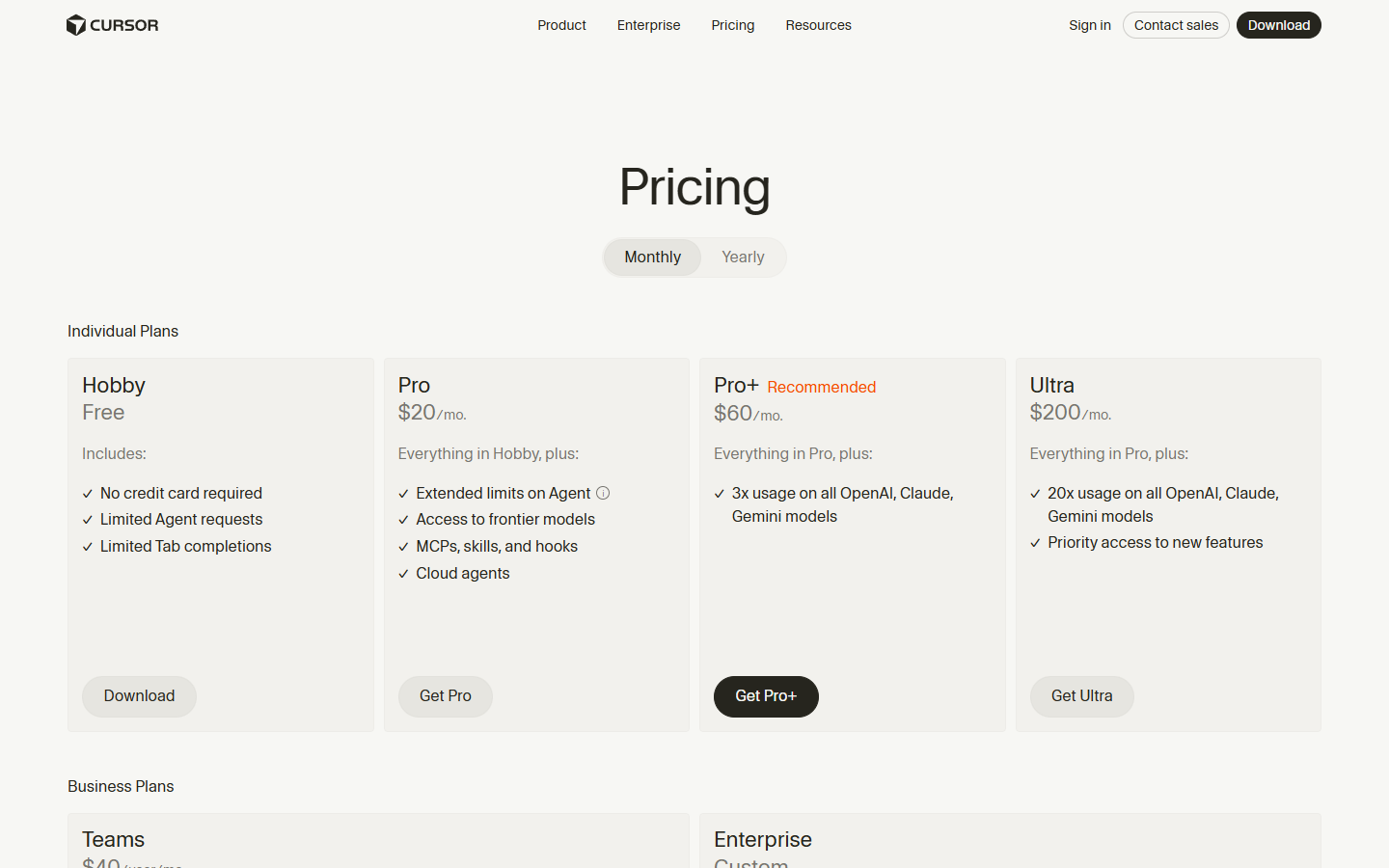
Plan | Price | Usage |
|---|---|---|
Hobby | Free | Limited |
Pro | $20/mo | Standard usage |
Pro+ | $60/mo | 3x Pro |
Ultra | $200/mo | 20x Pro |
Teams | $40/user/mo | Team features |
Enterprise | Custom | Custom |
The shift to usage-based pricing has drawn criticism from the community, with some users reporting unexpected bills when usage exceeds plan limits.
Who Is Cursor For?
Cursor excels for developers who want full control over their code. Complex multi-file refactors, debugging in large codebases, and sophisticated development workflows are its sweet spot. If you already work in VS Code, the transition is nearly seamless.
Lovable: Build a Complete Application Without Writing Code
The Fastest AI App Builder on the Market

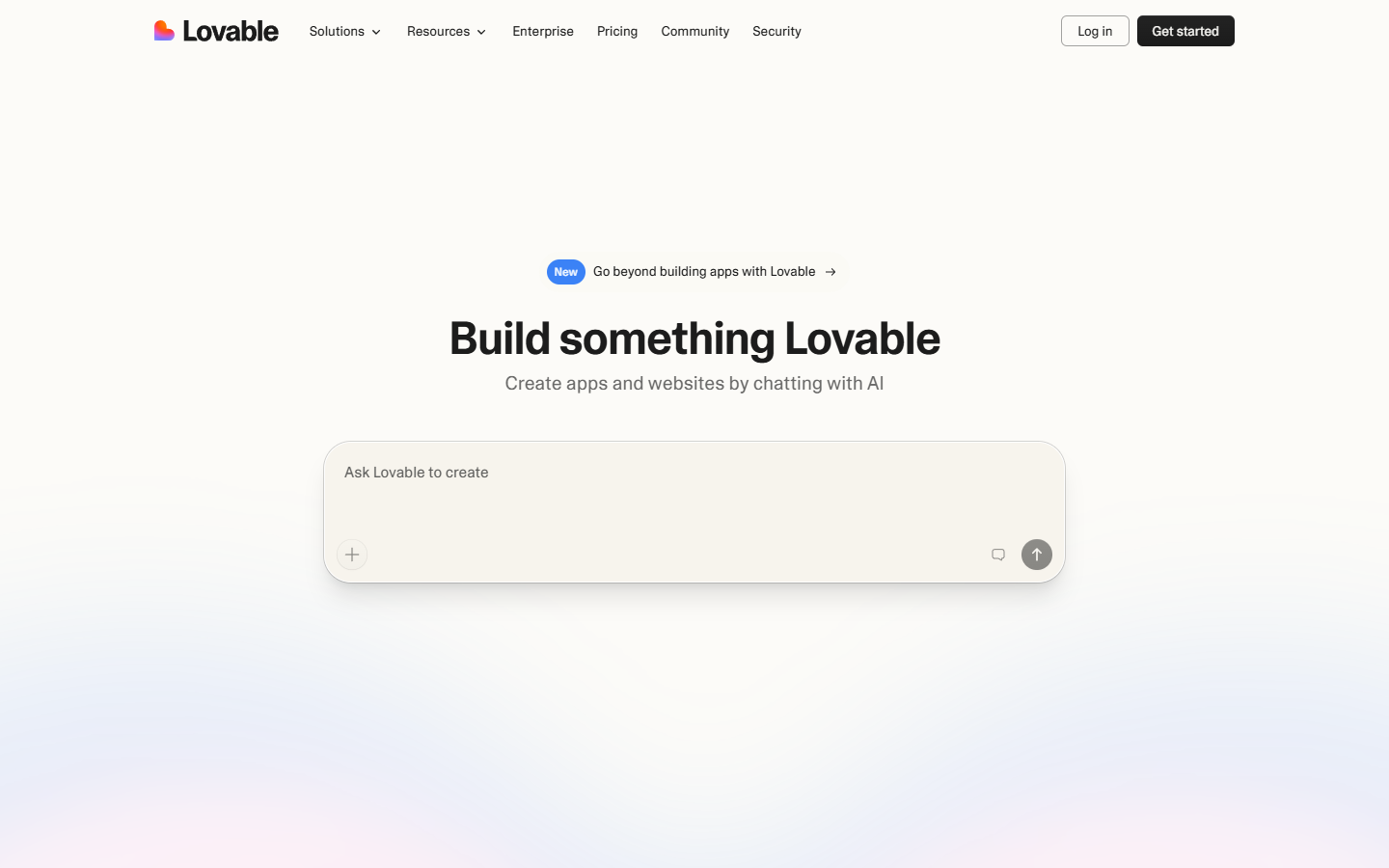
Lovable is an AI-powered application builder based in Stockholm, Sweden. Founded by Anton Osika, the product has experienced explosive growth: it hit $100 million in annual recurring revenue (ARR) in July 2025, then doubled to $200 million in just four months, as announced at the 2025 Slush conference in Helsinki. In December 2025, Lovable raised $330 million in a Series B round at a $6.6 billion valuation, led by CapitalG and Menlo Ventures' Anthology fund.
Unlike Cursor, which assists the developer, Lovable targets a broader audience: non-technical founders, product managers, designers, and anyone with an app idea but not the technical skills to build it.
Lovable's Key Features in 2026
Lovable 2.0, launched in February 2026, marked a major turning point for the platform:
Agent Mode: describe your application in natural language and the agent builds the entire app, front-end and back-end included.
Chat Mode: a conversational agent that helps you think through architecture and solve problems without directly modifying code.
Visual Edits: modify the UI directly, like a design tool, without touching the underlying code.
Dev Mode: for those who want hands-on access, a built-in editor allows direct code modifications.
Real-time collaboration: up to 20 users can work simultaneously on the same project.
Vulnerability scanning: automatic security checks before every deployment.
Lovable generates production-quality React/TypeScript code with Supabase as the default backend for database, authentication, and file storage. The output is immediately deployable.
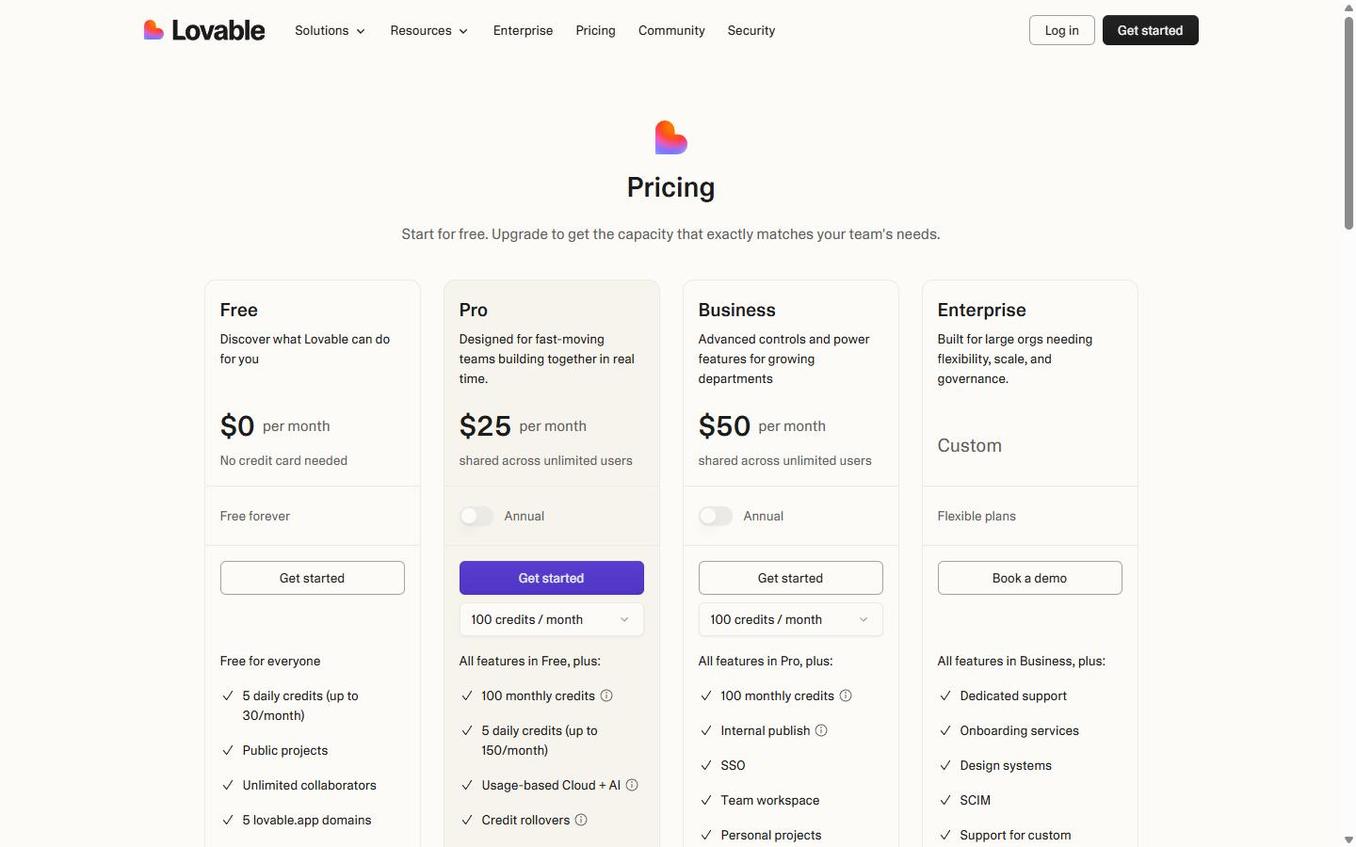
Lovable Pricing 2026
Plan | Price | Credits |
|---|---|---|
Free | $0 | 5 credits/day |
Starter/Pro | $25/mo | 100 credits/month |
Business | $50/mo | 100 credits/month + SSO, teams |
Lovable uses a credit system: each generation consumes credits based on complexity. Unused credits roll over month to month. On-demand top-ups are available.
Who Is Lovable For?
Lovable is the ideal tool for turning an idea into a functional prototype in hours. Startup founders validating a concept, product teams needing a rapid MVP, or companies looking to automate internal tools find Lovable to be a formidable ally. However, for high-traffic applications or highly specific architectures, the generated code will likely need adjustments by a developer.
v0 by Vercel: The Frontend and Next.js Specialist
Vercel's AI Tool Dedicated to User Interfaces

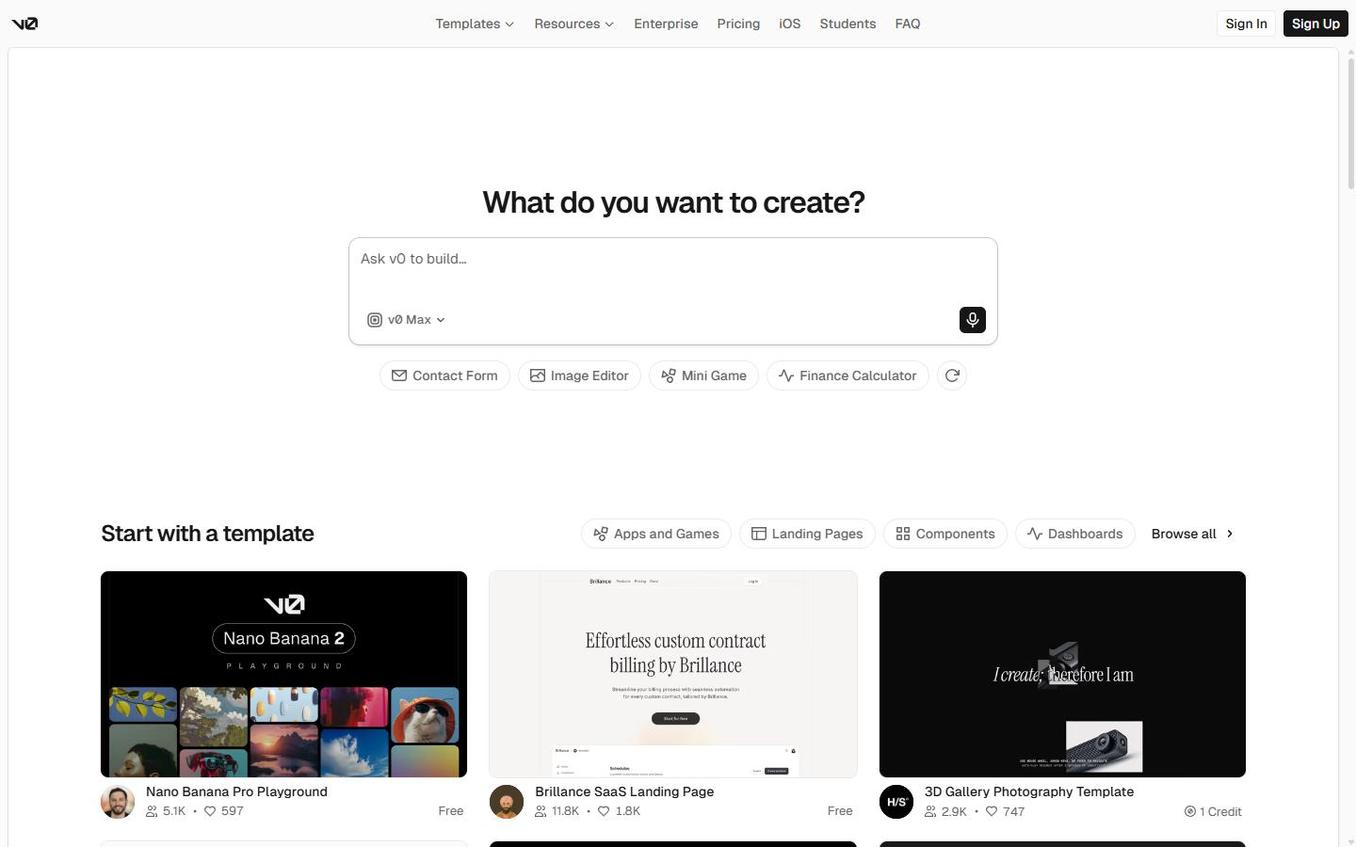
v0 is Vercel's AI product, from the company behind the Next.js framework that powers millions of websites. Where Lovable builds complete applications, v0 focuses on what Vercel does best: the frontend. The tool generates React components with Tailwind CSS from natural language descriptions, and the output can be instantly deployed on Vercel's infrastructure.
v0 uses its own proprietary models (v0-1.5-md for the free plan, v0-1.5-lg for paid plans), specifically optimized for generating high-quality user interfaces. The generated code integrates natively into the Next.js ecosystem, making it the natural choice for teams already using this framework.
v0's Key Features in 2026
UI component generation: describe a component (form, dashboard, pricing page) and v0 produces clean, responsive React/Tailwind code.
Figma import: convert your Figma designs into coded components (available on paid plans).
Instant deployment: one click to deploy to Vercel with automatic preview.
v0 API: integrate UI generation into your own development workflows.
Optimized models: v0 Mini, Pro, and Max tailored to different complexity levels.
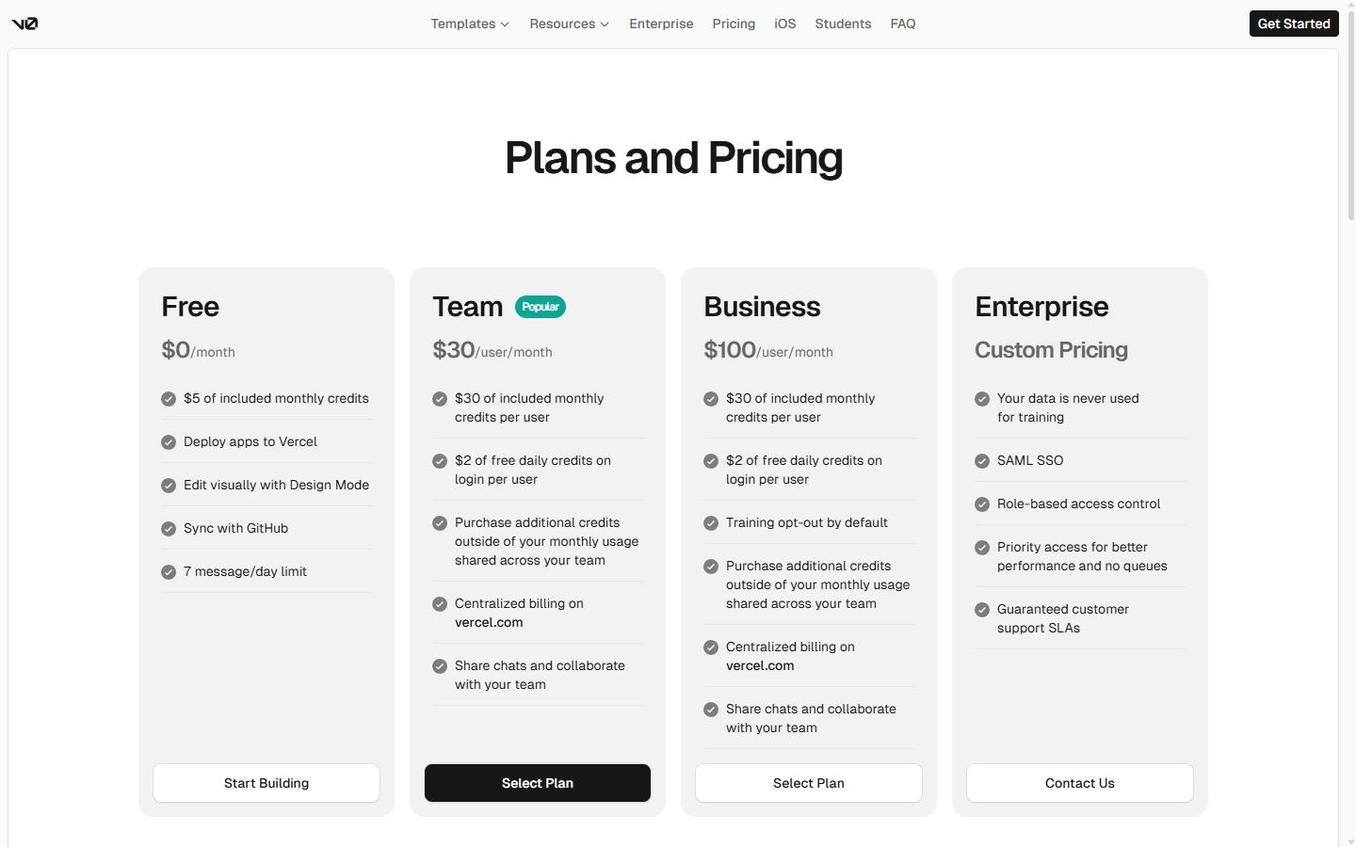
v0 Pricing 2026
Plan | Price | Credits |
|---|---|---|
Free | $0 | $5 in credits/month |
Premium | $20/user/mo | $20 in credits/month |
Team | $30/user/mo | $30 in credits/user/month |
Enterprise | Custom | SSO, audit logs, SLA |
Credits are consumed with each generation, and costs vary based on the model used and prompt complexity. Paid plans allow purchasing additional credits beyond the monthly allocation.
Who Is v0 For?
v0 is tailored for frontend teams working with Next.js and the Vercel ecosystem. If you need to quickly create polished interfaces, reusable components, or prototype web pages, v0 is remarkably effective. However, it does not handle backend logic: for a complete application, you will need to supplement with other tools.
Claude Code: The Terminal Agent for Complex Projects
The Swiss Army Knife for Advanced Developers
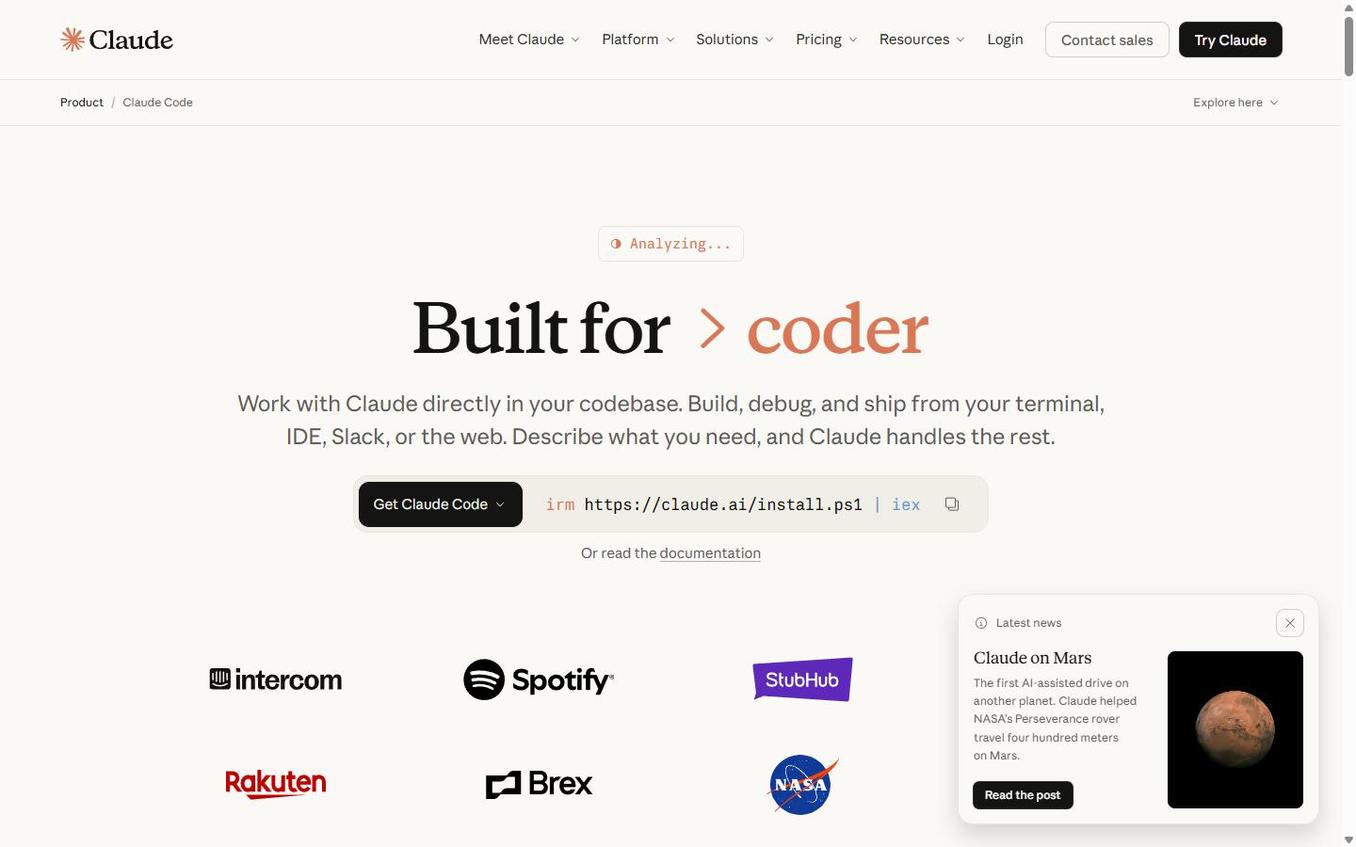
Claude Code is the agentic coding tool developed by Anthropic, the creator of Claude. Unlike Cursor, which presents itself as an IDE, Claude Code operates primarily from the terminal. It is an agent that reads your files, executes commands, searches your codebase, edits code, and can even automate CI/CD pipelines, all autonomously.
What sets Claude Code apart from other tools is its ability to understand entire codebases and perform coordinated changes across many files simultaneously. The agent does not just generate code: it analyzes context, understands dependencies, and proposes changes that are consistent with the existing architecture.
Claude Code's Key Features in 2026
Terminal agent: an autonomous agent operating directly in your terminal, capable of navigating file trees, executing scripts, and solving problems iteratively.
IDE integrations: available as an extension in VS Code and JetBrains, in addition to the native terminal mode, Desktop app, and web interface.
Agent SDK: a complete Python and TypeScript framework for building your own custom agents, based on the same infrastructure that powers Claude Code.
Codebase understanding: capable of navigating and understanding large-scale projects through a 200,000-token context window.
Skills and memory: specialized capabilities defined in Markdown, CLAUDE.md files for project memory, and custom slash commands.
Sub-agents: orchestrate multiple specialized agents for complex tasks.
CI/CD automation: integrate into continuous integration and deployment pipelines.
Claude Code Pricing 2026
Access to Claude Code is included in Anthropic's Claude subscriptions:
Plan | Price | Claude Code Access |
|---|---|---|
Free | $0 | No |
Pro | $20/mo | Yes (limited) |
Max 5x | $100/mo | Yes (full) |
Max 20x | $200/mo | Yes (full, priority) |
Team Standard | $25/user/mo | No |
Team Premium | $150/user/mo | Yes |
API | Pay-per-token | Yes |
For developers who use Claude Code intensively throughout the day, the Max 5x plan at $100 per month offers the best value. The Pro plan at $20 per month works well for occasional use.
Who Is Claude Code For?
Claude Code is the tool of choice for senior developers facing complex tasks: massive refactors, framework migrations, understanding legacy codebases, debugging in distributed systems. Its terminal-based agentic approach appeals to those who prefer the command line over graphical interfaces. The Agent SDK also makes it the go-to platform for building custom AI agents.
Comparison Table: Which Vibe Coding Tool Should You Choose in 2026?
Criteria | Cursor | Lovable | v0 by Vercel | Claude Code |
|---|---|---|---|---|
Type | IDE (code editor) | App builder | Frontend generator | Terminal agent |
Target audience | Professional developers | Founders, non-technical | Frontend/Next.js teams | Senior developers |
Entry price | $20/mo | $25/mo | Free ($5 credits) | $20/mo (Claude Pro) |
Advanced price | $200/mo (Ultra) | $50/mo (Business) | $100/user (Business) | $200/mo (Max 20x) |
Output language | Any language | React/TypeScript + Supabase | React/Tailwind/Next.js | Any language |
Backend | Yes (any framework) | Yes (Supabase built-in) | No (frontend only) | Yes (any framework) |
Key strength | Developer productivity, refactors | Full apps without code | Polished UI interfaces | Complex projects, multi-file |
Learning curve | Low (if VS Code user) | Very low | Very low | Medium (terminal) |
Collaboration | Multiplayer | Up to 20 users | Share via Vercel | Via Git |
Deployment | Manual (your infra) | Built-in (lovable.app) | Built-in (Vercel) | Manual (your infra) |
AI models | Composer 2, Claude, GPT, Gemini | Proprietary | v0-1.5-md/lg | Claude Sonnet/Opus 4.6 |
Our Experience at Bridgers: Four Tools, Four Use Cases
At Bridgers, we use all four tools daily, and this experience has taught us that the question is not "which is the best tool?" but rather "which tool for which situation?" Here is how we use them concretely in our projects.
Cursor for Day-to-Day Development
Cursor is our default code editor for daily development. Our developers use it to write, refactor, and debug code across all our client projects. The combination of Tab autocomplete, autonomous agents, and multi-model support makes it a remarkably versatile tool. Since the launch of Composer 2 on March 18, we have noticed a significant improvement in generated code quality, particularly on complex implementation tasks.
Lovable for Rapid Prototyping
When a client comes with an idea and needs a functional prototype in 48 hours, Lovable is our first choice. We have built several internal applications and complete client MVPs starting from simple text descriptions. The generated React/TypeScript code is clean enough to serve as a foundation for further development. Agent Mode is particularly impressive for transforming a client brief into a navigable application.
v0 for Polished Interfaces
For complex UI components, landing pages, and anything related to Next.js frontend work, v0 delivers superior visual quality. We use it particularly for prototyping interfaces before integrating them into our Cursor projects. Figma import is a considerable time saver when our designers deliver detailed mockups.
Claude Code for Complex Missions
Claude Code is our secret weapon for tasks that other tools handle poorly: migrating large codebases, architectural refactors, test automation on legacy projects. The Agent SDK also allows us to build custom agents for client-specific workflows. Its holistic understanding of a project, file by file, is unmatched.
Our Recommendation Based on Your Profile
If you are a professional developer, start with Cursor Pro at $20 per month. It is the most cost-effective investment for an immediate productivity boost.
If you are a non-technical founder, Lovable is your best ally. At $25 per month, you can build and iterate on a complete product without hiring a developer.
If you are a frontend team working with Next.js, v0 integrates naturally into your Vercel stack and produces remarkably high-quality components.
If you are a senior developer working on complex projects, Claude Code with the Max plan at $100 per month gives you the power of an agent capable of understanding and modifying entire codebases.
And if you are like us at Bridgers, you use all four. The real power of vibe coding in 2026 lies not in any single tool but in the ability to choose the right one for each situation.
Conclusion: Vibe Coding in 2026, a Maturing Ecosystem
The vibe coding tools market has matured considerably over the past year. The astronomical valuations ($29.3 billion for Cursor, $6.6 billion for Lovable) reflect investor conviction that these tools are permanently transforming how software is built. But beyond the numbers, the most interesting development is the diversification of approaches.
In 2025, vibe coding was often perceived as a rapid prototyping tool, suitable for simple projects. In 2026, with autonomous agents capable of navigating codebases spanning hundreds of thousands of lines, with app builders producing production-quality code, and with specialized tools for every layer of the stack, we are witnessing a genuine industrialization of AI-assisted development.
The question is no longer whether vibe coding is viable. The question is how to integrate it intelligently into your workflow. And for that, understanding the strengths and limitations of each tool is essential.
Preços claros, transparentes e sem custos ocultos.
Sem compromisso, preços para ajudá-lo a aumentar sua prospecção.

Créditos(opcional)
Você não precisa de créditos se você quiser apenas enviar e-mails ou fazer ações no LinkedIn
Podem ser usados para:
Encontrar E-mails
Ação de IA
Encontrar Números
Verificar E-mails
€19por mês
1,000
5,000
10,000
50,000
100,000
1,000 E-mails encontrados
1,000 Ações de IA
20 Números
4,000 Verificações
€19por mês
Descubra outros artigos que podem lhe interessar!
Ver todos os artigosSoftware
Publicado em 6 de jul. de 2025
Lead411 vs Lusha vs Emelia : o duelo definitivo entre as ferramentas de prospecção B2B
 Mathieu Co-founder
Leia mais
Software
Publicado em 30 de jun. de 2025
Snov.io vs Waalaxy: comparação para prospecção B2B
Mathieu Co-founderLeia mais
Software
Publicado em 1 de jul. de 2025
Lusha vs Waalaxy vs Emelia: quem dominará em 2026?
 Niels Co-founder
Leia mais
Software
Publicado em 25 de mai. de 2025
Os 15 melhores softwares gratuitos para substituir o Photoshop
Mathieu Co-founderLeia mais
Software
Publicado em 15 de mai. de 2025
6 melhores softwares de edição de vídeo gratuitos: conteúdos profissionais gratuitos
Mathieu Co-founderLeia mais
Software
Publicado em 2 de mai. de 2024
7 melhores alternativas ao Lemlist: o guia definitivo de 2026
 Marie Head Of Sales
Leia mais
Links úteis
HubCold-email: Guia CompletoEntregabilidade: Guia completoAlternativa ao LemlistAPISolicitar uma demonstraçãoPrograma de afiliadosFind email Maylee
Made with ❤ for Growth Marketers by Growth Marketers
Copyright © 2026 Emelia All Rights Reserved