In a world where inboxes are saturated, a well-crafted professional meeting request email can transform a simple contact into a concrete opportunity. This 2026 guide reveals the essential strategies to hit the mark with every send.
Why does email remain a key tool in 2026?
Email remains a pillar of professional communication, particularly in B2B, thanks to its unique assets:
Professionalism : A structured message reinforces your credibility.
Flexibility : The recipient responds at their own pace, without immediate pressure.
Traceability : Archived exchanges make it easy to follow up on conversations.
Personalization : Each email can be tailor-made to meet the recipient's needs.
In 2026, despite the rise of social networks, email remains the preferred channel for formal requests, combining seriousness and universality. A poorly written email, on the other hand, can hurt your image. Mastering this tool is therefore essential to stand out.
Emelia.io reinforces this mastery by offering an intuitive interface that guides the creation of professional emails, with templates optimized for B2B, allowing you to structure impactful messages in a few clicks.
The fundamentals of an effective email
For a meeting request email to be effective, it must include five key elements:
A punchy subject line : Short, precise and intriguing, it encourages opening by highlighting a benefit or a relevant topic.
Authentic personalization : Reference a specific news item or challenge of the recipient to show your preparation.
A concise body : 5 to 6 sentences maximum, following the inverted pyramid (objective first, then details).
A clear call to action : Propose specific time slots with flexibility, using engaging terms.
Appropriate politeness : Choose a salutation and closing formula in line with the level of formality.
Adopt the 3P method to structure your emails:
Personalization : Create a link with the recipient via a specific reference (e.g.: LinkedIn news, recent project).
Problem : Identify a challenge or opportunity and position your solution as a relevant response.
Proposal : Suggest a meeting with clear details on duration, format and expected benefits.
Stay brief, direct and professional, while showing that you understand the recipient's issues.
Here are two concrete examples:
Example 1: Cold prospecting (formal tone)
Subject : Meeting proposal to optimize your processes Dear [Name],
The recent expansion of [Company] into [sector] testifies to your momentum.
At [Your company], we support similar organizations to optimize their processes, with an average reduction of 30% in operational costs.
Would you be available for a 20-minute exchange to discuss this opportunity? I propose:
Tuesday [date] at 10am
Thursday [date] at 2pm
I adapt to your availability if necessary. Best regards,
[Your name]
Example 2: Follow-up after contact (professional tone)
Subject : Following our exchange, meeting proposal Dear [Name],
Following our discussion during [context/event], I noted your interest in [topic discussed].
Our solution [name] could address this challenge, as it did for [similar client], with a 25% increase in their efficiency.
Could you grant me 20 minutes to go further on this point? I suggest:
Wednesday [date] at 11am
Friday [date] at 9am
I remain flexible for another slot.
Looking forward to your reply,
[Your name]
Strategic timing and follow-ups
Best times to send
The choice of sending time is crucial to maximize open and reply rates. In 2026, the data confirms the following trends:
Optimal days : Tuesday, Wednesday and Thursday, when professionals are at their productivity peak.
Effective hours :
10am-11am : Recipients often check their emails after handling morning emergencies.
2pm-3pm : A post-lunch window where attention is focused again.
8am-9am (secondary) : For early birds, especially in sectors like finance or tech.
To avoid :
Monday morning : Inboxes are cluttered after the weekend.
Friday afternoon : Concentration decreases at the end of the week.
School holidays and public holidays : Absences are frequent, reducing the chances of response.
Time zones : If you target international prospects, use tools like Emelia.io to schedule sends based on the recipient's time zone.
Industry tip :
Startups and tech : Prefer early morning sends (8am-9am) to capture dynamic teams.
Large companies : Mid-day slots (10am-12pm) are often more effective for overloaded executives.
Effective follow-up
Without a reply, a well-thought-out follow-up can revive interest without annoying. Here is a detailed strategy for an optimal follow-up sequence:
Day 0: Initial send : Your starting email, with a punchy subject line and personalized content.
Day 3-5: First follow-up :
Tone : Light and friendly, without insisting.
Content : Introduce a new angle, like an open question or a reference to recent news of the recipient (e.g.: "I saw that [Company] just launched [project]. Could this be relevant to our discussion?").
Example :
Subject : An opportunity to explore for (company name)
Hello [Name],
I'm following up on my email from [date]. Your recent project on [topic] seems aligned with our solution, which helped [similar client] achieve [result].
Would you be available for a short exchange?
I propose Wednesday at 10am or Friday at 2pm.
[Unsubscribe link]
Best regards,
[Your name]
Day 10-12: Second follow-up :
Tone : Bring added value.
Content : Share a relevant resource (article, study, infographic) or a statistic related to their industry. This shows your expertise and maintains interest.
Example :
Subject : An idea for [recipient's challenge]
Hello [Name],
Thinking back about your activity in [sector], I thought our guide on [topic] could interest you ([link]). If you have 15 minutes, I would be delighted to discuss how we can address [challenge]
How about Tuesday at 11am?
[Unsubscribe link]
Best regards,
[Your name]
Day 25-30: Final follow-up :
Tone : Respectful, with light urgency.
Content : Mention a subtle deadline (e.g.: a limited offer or upcoming event) and propose a final opportunity to exchange.
Example :
Subject : Last chance to discuss [topic]?
Hello [Name],
I wouldn't want to miss the opportunity to introduce you to our solution, which allowed [client] to reach [result].
With [event/offer] approaching, would you be available for a quick exchange before the end of the month?
I can adapt to your schedule.
[Unsubscribe link]
Best regards,
[Your name]
Best practices for follow-ups :
Limit to 3 follow-ups : Beyond, you risk hurting your reputation.
Vary the subject lines : A new subject attracts attention (e.g.: "An idea for [topic]" instead of "Re: [topic]").
Add an unsubscribe link : From the first follow-up, include a clear means for the recipient to unsubscribe, in line with GDPR best practices.
Use A/B testing : Test different times, subjects or follow-up contents with tools like Emelia.io to identify what works.
Analyze non-responses : If no follow-up converts, assess whether the prospect is poorly targeted or your proposal lacks clarity.
Numerical data :
Follow-ups increase reply rates by 20-30% on average (source: B2B studies 2026).
50% of positive replies arrive after the first or second follow-up.
Emails sent between 10am and 11am have an open rate 15% higher than those sent in the afternoon.
The pitfalls to avoid
To guarantee the success of your emails, avoid these common mistakes:
Vague or too salesy subject line : A subject like "Incredible offer" risks being ignored or marked as spam.
Lack of personalization : A generic email gives the impression of a mass send.
Body too long : More than 6-7 sentences reduces the chances of complete reading.
Ambiguous call to action : Avoid phrases like "Contact me whenever you want". Propose specific slots.
Too frequent or aggressive follow-ups : Spacing follow-ups and remaining polite is crucial to preserve your image.
Ignoring deliverability : Unverified addresses or poor email warmup can direct your messages to spam.
By using tools like Emelia.io, you can automate address verification and optimize deliverability to avoid these pitfalls.
Amplify your sends with modern tools
Emelia.io is an all-in-one platform designed to maximize the effectiveness of your emailing campaigns.
Here are its main features:
Cold Email
Emelia.io allows you to launch cold email campaigns, whether on a small or large scale, via an ultra-intuitive interface.
Its features include:
Advanced personalization : Integrate variables like first name or company to capture attention.
A/B testing : Test different versions of your messages to identify the best performing one.
Multi-campaign management : Orchestrate several campaigns simultaneously without effort.
Email Verifier
This tool verifies the validity of email addresses to reduce bounces and improve deliverability. It identifies active addresses and eliminates the risk of errors.
Email Warmup
Increase deliverability with a 97% score and 74% efficiency. This feature prepares your domain to avoid spam filters.
LinkedIn prospecting tools
LinkedIn prospecting : Automates campaigns on LinkedIn in three steps: connection (2 days), profile visit (1 day), and message sending.
LinkedIn Sales Navigator Scraper : Extracts lead data beyond the limit of 2,500 extractions per day, ideal for enriching your databases.
Data enrichment tools
Email Finder : Finds verified email addresses with an 80% success rate, including catch-all verification.
Phone Finder : Recovers phone numbers from first name, last name and LinkedIn URL for direct outreach.
Advanced features
Multichannel : Create personalized campaigns with evolving scenarios. New nodes are added every week based on user needs.
Merged Inbox : Centralizes all replies in a single space for simplified follow-up (e.g.: helensmith@emelia.io).
Magic Reply : An AI automatically responds to emails in the Merged Inbox, saving time.
Magic Writer : Generates personalized and impactful emails thanks to artificial intelligence.
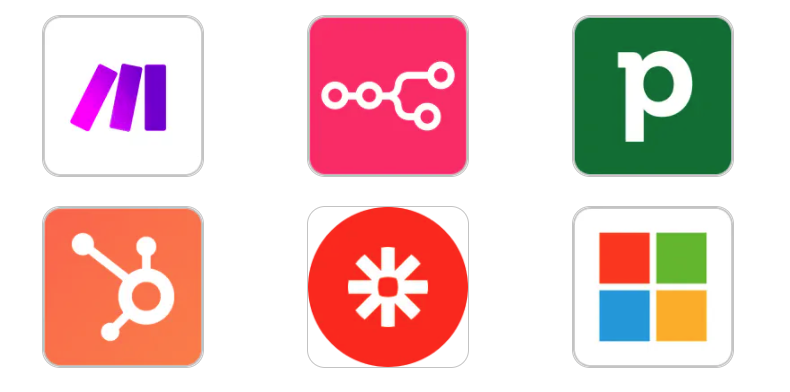
Integrations : Connect Emelia to Make, Zapier, Pipedrive, or HubSpot for centralized prospecting.
Simplified configuration
Configuring a campaign with Emelia.io is automated and intuitive:
Set the intervals between emails (e.g.: 2 days, 5 days, 8 days).
Choose the sending days (e.g.: business days) and time slots (e.g.: 9am-11am, 1pm-6pm).
Import a contact list via the LinkedIn Sales Navigator scraper.
Create emails with custom variables (first name, company, etc.).
Launch the campaign with a click. Emelia manages the sends, respects the settings and optimizes deliverability.
Handle refusals with finesse
A refusal is not an end, but an opportunity to build a future relationship. Here's how to react:
Thank politely : Express your gratitude for their reply, even if negative.
Propose a later follow-up : Suggest renewing contact in 6 months or at a more opportune time.
Stay connected : Add the prospect on LinkedIn to maintain a discreet presence.
Analyze the refusal : Identify whether the timing, offer or approach should be adjusted.
Example of response to a refusal:
Subject : Thank you for your reply
Hello [Name],
Thank you for your reply and for taking the time to read me.
I understand that the timing is not ideal.
May I contact you again in a few months to redisuss [topic]?
In the meantime, I remain available for any question.
Best regards,
[Your name]
Adapting your approach by industry
Each industry has its specificities. Here's how to adjust your emails:
Technology : Insist on innovation and efficiency gains. Use a direct tone and numerical data.
Healthcare : Highlight compliance and benefits for patients. Adopt an empathetic tone.
Finance : Emphasize security and returns on investment. Stay formal and precise.
Retail : Focus on customer experience and sales growth. Use a dynamic tone.
Industry : Talk about sustainability and process optimization. Be technical and concrete.
Personalize your messages based on the specific challenges of the industry, relying on tools like Emelia.io to integrate relevant data.
Conclusion
A meeting request email is an opportunity to create valuable connections. By combining a catchy subject, a clear structure, careful personalization and a punchy call to action, you will transform your messages into concrete meetings.
Your turn to play:
Analyze your current emails to spot the flaws.
Test approaches adapted to your audience.
Use tools like Emelia.io to automate and optimize your campaigns.
Your next meeting is just one well-written email away. Go for it!
Click here to test Emelia for free!
What is the ideal length of a meeting request email? 5-6 sentences (about 15 lines), putting the essentials first via the inverted pyramid.
Should you mention a price in the first email? No, focus on getting the meeting. Bringing up price too early can put off the prospect.
How many follow-ups are acceptable? Up to 3 follow-ups over 30 days, varying the angles and bringing value each time.
How to personalize at scale? Tools like Emelia.io automate personalization by integrating specific data for each recipient.
What to do in case of refusal? Thank politely, propose to renew contact later (e.g.: in 6 months), and stay connected via LinkedIn.
Is email still relevant against social networks? Yes, it remains the most effective channel for formal B2B requests, complementary to social networks.
Frequently asked questions about How to nail your meeting request by email?
What is the ideal length of a meeting request email?+
5 to 6 sentences max, about 15 lines, applying the inverted pyramid : objective at the start, details after. A short, direct email converts much better than a long one.
How many follow-ups should you send without seeming pushy?+
Up to 3 follow-ups spaced 3-5 days apart over 30 days. Vary the angle each time : new value, fresh perspective, soft breakup. Beyond 3, you damage your reputation.
When are the best times to send a meeting request email?+
Tuesday to Thursday between 10am-11am or 2pm-3pm. Avoid Monday morning (cluttered inboxes) and Friday afternoon (low concentration). Adapt to time zones if prospecting internationally.
How does Emelia help nail your meeting request emails?+
Emelia automates personalization at scale, sequences follow-ups intelligently, handles deliverability (warmup, verification) and centralizes replies in a Merged Inbox. From 37 €/month with everything included.