
Back to hub
Blog
AI
Perplexity Computer: Revolution or Hype? What We Actually Know
Published on Mar 13, 2026Updated on May 27, 2026
At Emelia, we build a B2B prospecting tool that integrates artificial intelligence at every step: cold email, LinkedIn automation, data enrichment. The emergence of AI agents capable of executing complete workflows autonomously is something we follow closely, because these technologies could fundamentally change how sales teams operate. That is also the case at Bridgers, our digital agency specializing in AI, which constantly evaluates new tools on the market. Perplexity Computer is one of the most ambitious announcements of early 2026, and we decided to give you an honest analysis of what we know, and what we do not know yet.
What Is Perplexity Computer?
Perplexity Computer is a general-purpose AI agent announced on February 25, 2026 by Aravind Srinivas, CEO of Perplexity AI. The idea is appealing: instead of juggling ChatGPT for writing, Midjourney for images, GitHub Copilot for code, and a dozen other tools, you describe a complete objective and Perplexity Computer handles everything end to end.
The system runs inside an isolated cloud sandbox (2 vCPU, 8 GB RAM, Linux) and orchestrates approximately 20 specialized AI models to break your request into subtasks, assign them to parallel sub-agents, and assemble the final result. Research, design, code, deployment: everything is supposed to happen within a single asynchronous conversation.
In practice, you tell it "analyze my competitors in the French B2B SaaS market, create a 15-slide presentation with charts, and email it to my team" and Perplexity Computer is supposed to do the rest.
The promise is bold. But as is often the case in the AI world in 2026, there is a gap between the announcement and reality. Let us break it all down.
How Does 20-Model AI Orchestration Work?
The main selling point of Perplexity Computer is its "model-agnostic" approach. Rather than relying on a single model for everything, the system dynamically selects the best model for each subtask. Here is what we know about the models in use:
Claude Opus 4.6 (Anthropic): core reasoning engine
Google Gemini: deep research, sub-agent creation
Nano Banana: image generation
Veo 3.1 (Google): video generation
xAI Grok: speed for lightweight tasks
GPT-5.2 (OpenAI): long-context recall and wide search
Plus approximately 14 other specialized models
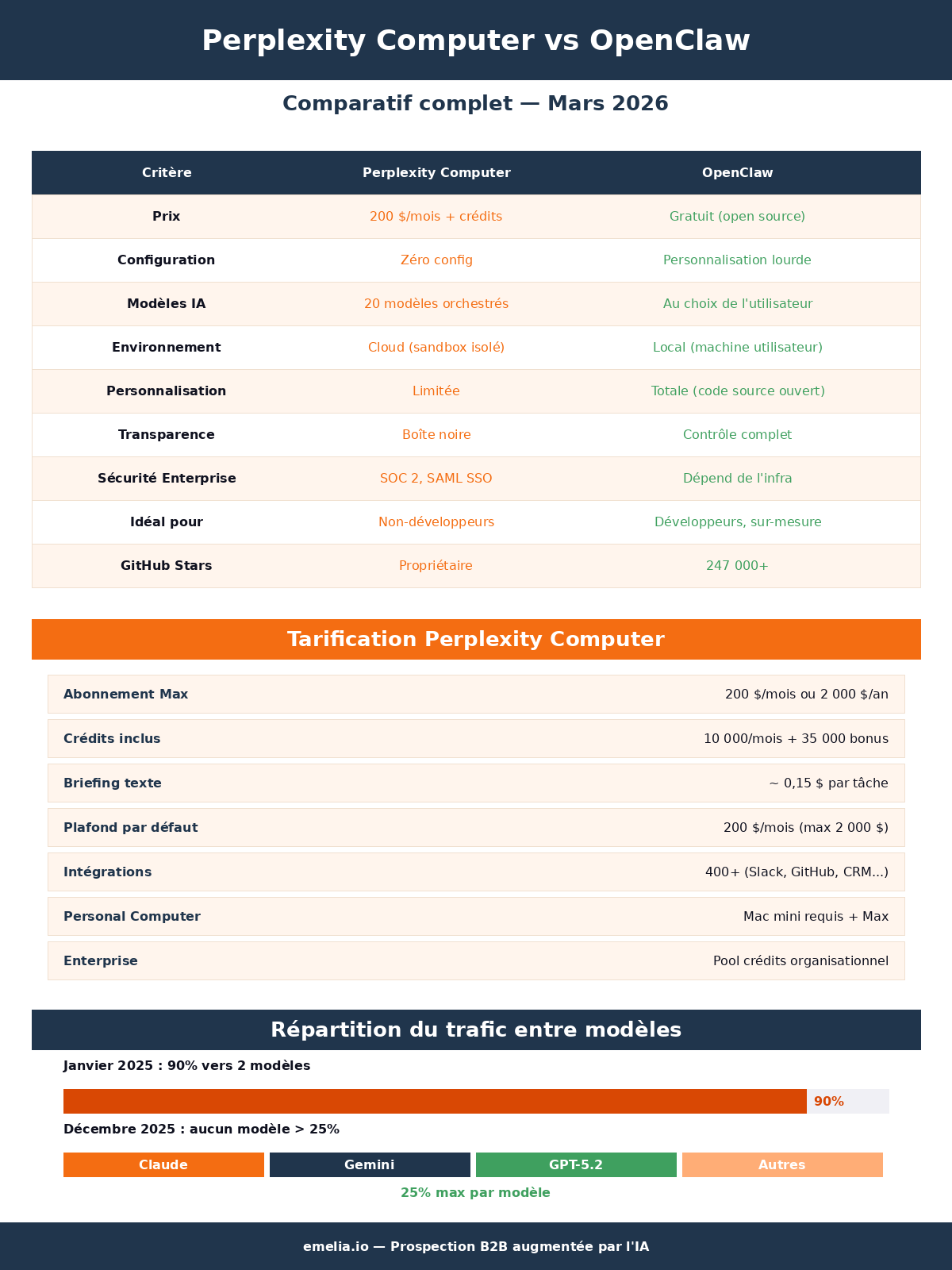
According to Perplexity, the traffic distribution across models has changed dramatically: in January 2025, 90% of queries went to just two models. By December 2025, no single model accounted for more than 25% of traffic. That is a significant architectural shift.
The Multi-Vendor Dependency Problem
This approach raises a legitimate question: Perplexity depends on APIs from its direct competitors. Anthropic, OpenAI, and Google supply the models but are also in direct competition on the AI agent market. What happens if one of them decides to cut access or dramatically increase pricing? This is a structural risk that investors and users should keep in mind.
On Reddit, several users have raised this exact point: managing API changes, model deprecations, and pricing fluctuations across 19 different providers is a considerable logistical challenge.
Personal Computer: A Mac Mini as a 24/7 AI Agent
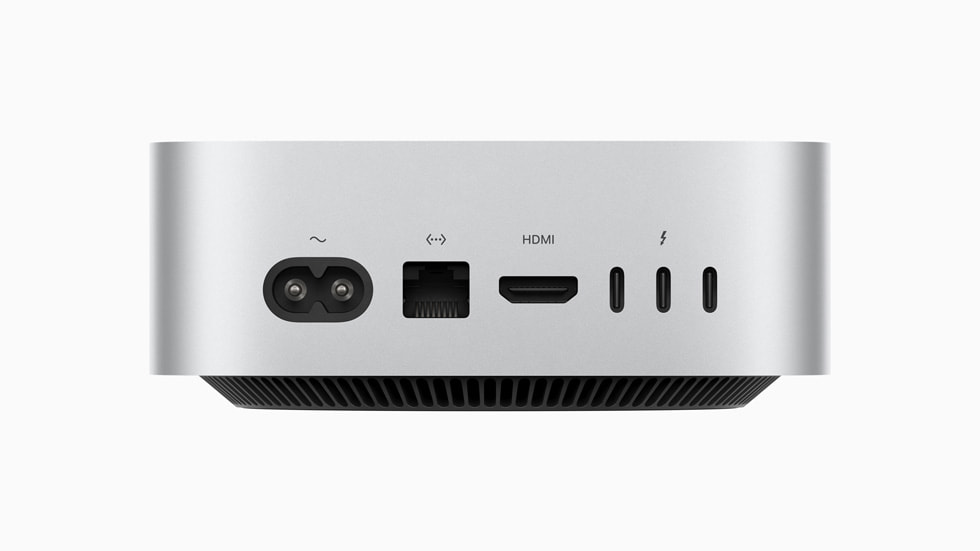
Announced at the Ask 2026 conference on March 11-12 in San Francisco, the Personal Computer is perhaps Perplexity's most audacious concept. It is an always-on AI agent running on a Mac mini that merges your local files, applications, and sessions with Perplexity's cloud-based Computer.
The idea is that of a "persistent digital proxy" working for you around the clock, even when you are not at your screen. It can monitor triggers, execute proactive tasks, and be controlled remotely from any device.

Aravind Srinivas sums up the philosophy in one sentence: "A traditional operating system takes instructions; an AI operating system takes objectives."
What We Know (and What We Don't)
On the security front, Perplexity announces explicit approval for sensitive actions, a full audit trail, and a kill switch. In theory, that is reassuring. In practice, no independent test of these mechanisms has been published yet.
The Personal Computer is Mac-only at launch, restricted to Max subscribers ($200/month), and currently accessible only through a waitlist. In other words: for most of you, this is still a promise.
How Much Does Perplexity Computer Cost?
Perplexity Computer's pricing is built on a Max subscription at $200 per month (or $2,000 per year). This subscription includes 10,000 monthly credits, with a temporary bonus of 35,000 additional credits at launch.
Each task consumes credits based on its complexity. A text briefing costs approximately 15 cents, but tasks involving video or long-running workflows are significantly more expensive. Perplexity offers a default spending cap of $200/month (raisable to $2,000), an auto-refill option for credits, and access coming soon for Pro subscribers.
For enterprises, Perplexity Computer for Enterprise offers usage-based pricing with an organization-wide credit pool, SOC 2 Type II compliance, SAML SSO, and SCIM provisioning.
Criteria | Details |
|---|---|
Subscription | $200/month (Max) |
Credits included | 10,000/month + 35,000 bonus |
Cost per text briefing | Approximately $0.15 |
Default spending cap | $200/month |
Maximum spending cap | $2,000/month |
Integrations | 400+ (Slack, GitHub, Salesforce, etc.) |
Early User Feedback: Bugs and Promises
This is where things get interesting, and it is the core of our analysis. The first weeks of Perplexity Computer usage have revealed a significant gap between the marketing promise and reality on the ground.
The Builder.io Review: A Mixed Verdict
Builder.io published an in-depth review of Perplexity Computer in early March. Here is what stands out:
What works well:
Cloud sandbox consistency (no "works on my machine" problems)
Multi-agent orchestration is impressive on paper
Generalist flexibility (research, slides, email in a single conversation)
Zero setup required, unlike OpenClaw
Good context compaction over long sessions
What does not work:
Connectors are buggy: Vercel OAuth expires every session, Ahrefs only shows backlinks, GitHub required a PAT workaround
Black box problem: no live preview, no hot reloading, no visibility into what is happening inside the sandbox
Silent failures: npm install failed silently, the agent burned 10,000 credits on broken Vercel deployments
Runaway costs: $200 in credits consumed for a basic website due to silent failures
No environment customization: no persistent config, no secrets management, no custom MCP servers
The Builder.io review conclusion is unambiguous: "In practice, the few [connectors] I tested had significant issues."
Reddit Users: Credits Going Up in Smoke
User feedback on Reddit confirms these problems. One user reported burning through 15,000 credits (50% above their monthly allowance) in a single 40-minute task. Others complain about pricing that pushes toward Enterprise plans and a lack of transparency around actual credit consumption.
Some users do appreciate the tool's generalist flexibility but find coding workflows particularly frustrating. A single-page website reportedly took two days to build with Perplexity Computer, where an experienced developer would have spent a few hours.
Perplexity Computer vs OpenClaw: What's the Difference?
The comparison with OpenClaw is inevitable. OpenClaw is an open-source AI agent with over 247,000 GitHub stars, and it takes a radically different approach.
Criteria | Perplexity Computer | OpenClaw |
|---|---|---|
Price | $200/month + credits | Free, open source |
Setup | Zero config, managed cloud | Heavy customization required |
Environment | Isolated cloud sandbox | User's local machine |
Models | 20 models, auto-orchestrated | User chooses their model |
Customization | Limited | Full (source code available) |
Best for | Generalist tasks, non-developers | Developers, custom workflows |
GitHub community | Proprietary project | 247,000+ stars |
The choice between the two fundamentally depends on your profile. If you are a developer who wants total control over your environment and models, OpenClaw remains hard to beat, especially at a price of zero. If you want a turnkey solution that manages everything for you and are willing to pay $200/month, Perplexity Computer is more accessible, but with the caveats we have outlined.
For non-technical B2B teams, Perplexity Computer has a clear advantage in terms of ease of use. For technical teams, OpenClaw offers more flexibility and reliability at this stage.
Computer for Enterprise: Perplexity's Real Target?
Also announced at Ask 2026, Perplexity Computer for Enterprise targets large organizations with compliance and security requirements.
Announced features include:
SOC 2 Type II compliance
SAML SSO and SCIM provisioning
Full audit logs
Firecracker microVM isolation (the same technology behind AWS Lambda) per session
Connections to Snowflake, Salesforce, HubSpot, Datadog, SharePoint
Custom connectors via Model Context Protocol
Slack integration: mention @computer in channels and threads
Workflow templates: legal contract review, financial audit, sales prep, customer support
Dmitry Shevelenko, Perplexity's COO, stated: "With no hyperbole, the introduction of Computer inside Perplexity was the single biggest productivity unlock in our entire history as a company." He added that the tool had "taken off in a way that no other internal prototype ever did before."
Again, we will need to see whether these promises hold up in real-world environments. The fact that even the Builder.io review flagged connector issues gives pause for thought.
Real B2B Use Cases
This is the question that interests us most at Emelia: what can Perplexity Computer actually do for a B2B sales team? Here are the most promising use cases, keeping in mind that most remain theoretical at this stage.
CRM Integration and Data Enrichment
Perplexity Computer announces connectors with Salesforce and HubSpot. In theory, you could ask the agent to scan your CRM, identify prospects who have been inactive for 3 months, enrich their data through web research, and prepare a personalized re-engagement sequence. This is exactly the type of workflow Emelia already automates, but with an additional layer of contextual analysis.
Automated Competitive Intelligence
Imagine an agent that continuously monitors your competitors' websites, social media posts, job listings, and press releases, then generates a structured weekly intelligence report. With the Personal Computer running 24/7, this scenario is theoretically possible.
Data Analysis and Reporting
With connections to Snowflake and the 40+ financial data sources announced, Perplexity Computer could generate interactive dashboards, Excel models, and market analyses on demand. For sales teams that need to prepare data-driven presentations before a meeting, this represents a potentially significant time savings.
Slack Automation
The Slack integration with @computer mentions in channels is perhaps the most immediately useful use case. Asking a complex question directly in a thread and receiving a structured answer with sources, without leaving Slack, is the kind of tool that B2B teams adopt quickly.
Marketing Too?
Aravind Srinivas claimed on X that Perplexity Computer had replaced $225,000 worth of marketing tools per year in a single weekend, by connecting to Google Ads and Meta Ads APIs. If true, that is impressive. But it is a claim from a CEO about his own platform: take it with all the appropriate caveats.
Perplexity AI by the Numbers in 2026
For context: Perplexity AI reported annualized revenue of approximately $148 million in mid-2025, with a target of $656 million by the end of 2026. The company is in direct competition with Microsoft Copilot, Salesforce Einstein, Google Gemini Workspace, and Anthropic Claude.
The launch of Computer and Personal Computer is part of a diversification strategy beyond the AI search engine that built Perplexity's reputation. The Ask 2026 conference also saw the announcement of Comet Enterprise (an AI-native browser with CrowdStrike security), a deep integration with the Samsung Galaxy S26 ("Hey Plex"), and new embedding models that reportedly outperform those from Google and Alibaba.
Should You Invest in Perplexity Computer Right Now?
Our position is clear: Perplexity Computer is a fascinating announcement with real potential, but it is too early to make it a pillar of your B2B stack.
Reasons to be excited:
Multi-model orchestration is an elegant approach that could become the standard
The announced integrations (400+) cover the majority of B2B tools
Personal Computer, if it delivers on its promises, could redefine individual productivity
The Enterprise offering with SOC 2 compliance addresses real needs of large organizations
Reasons to wait:
Connectors are still unstable, as confirmed by Builder.io's testing
Costs can spiral quickly without reliable control mechanisms
Personal Computer is waitlisted, Mac-only, and no one has tested it independently
Dependency on competitor APIs is a structural risk
At $200/month, the entry cost is steep for a technology that has not yet proven itself
For B2B prospecting teams already using Emelia, our recommendation is to stick with the tools that work today and monitor Perplexity Computer's evolution over the coming months. If CRM connectors stabilize, if costs become predictable, and if independent reviews confirm the promises, then it will be time to test it seriously.
Until then, let us wait and see what it actually delivers. And that is probably the most honest position anyone can take in March 2026.
Clear, transparent prices without hidden fees
No commitment, prices to help you increase your prospecting.

Credits(optional)
You don't need credits if you just want to send emails or do actions on LinkedIn
May use it for :
Find Emails
AI Action
Phone Finder
Verify Emails
€19per month
1,000
5,000
10,000
50,000
100,000
1,000 Emails found
1,000 AI Actions
20 Number
4,000 Verify
€19per month
Discover other articles that might interest you !
See all articlesSoftware
Published on Jun 24, 2025
Kaspr vs Waalaxy: The Champions Redefining B2B Prospecting
 Mathieu Co-founder
Read more
B2B Prospecting
Published on Jun 30, 2025
Zopto vs Waalaxy: Comparison of LinkedIn automation tools
 Niels Co-founder
Read more
Software
Published on Jul 6, 2025
Kaspr vs RocketReach: The Ultimate Comparison of B2B Prospecting Tools for 2026
Niels Co-founderRead more
B2B Prospecting
Published on Jun 26, 2025
Clearbit vs Cognism: Common Features and Differences
Niels Co-founderRead more
B2B Prospecting
Published on Jul 2, 2025
Overloop vs Waalaxy vs Emelia: Which Tool Will Boost your B2B Prospecting?
Niels Co-founderRead more
Software
Published on Jun 30, 2025
Salesflow vs Waalaxy: The Ultimate Battle of 2026
Niels Co-founderRead more
 Maylee
Made with ❤ for Growth Marketers by Growth Marketers
Copyright © 2026 Emelia All Rights Reserved